Information and education are an essential part of the client experience, and we
are here to provide resources and insights to help keep you advised.
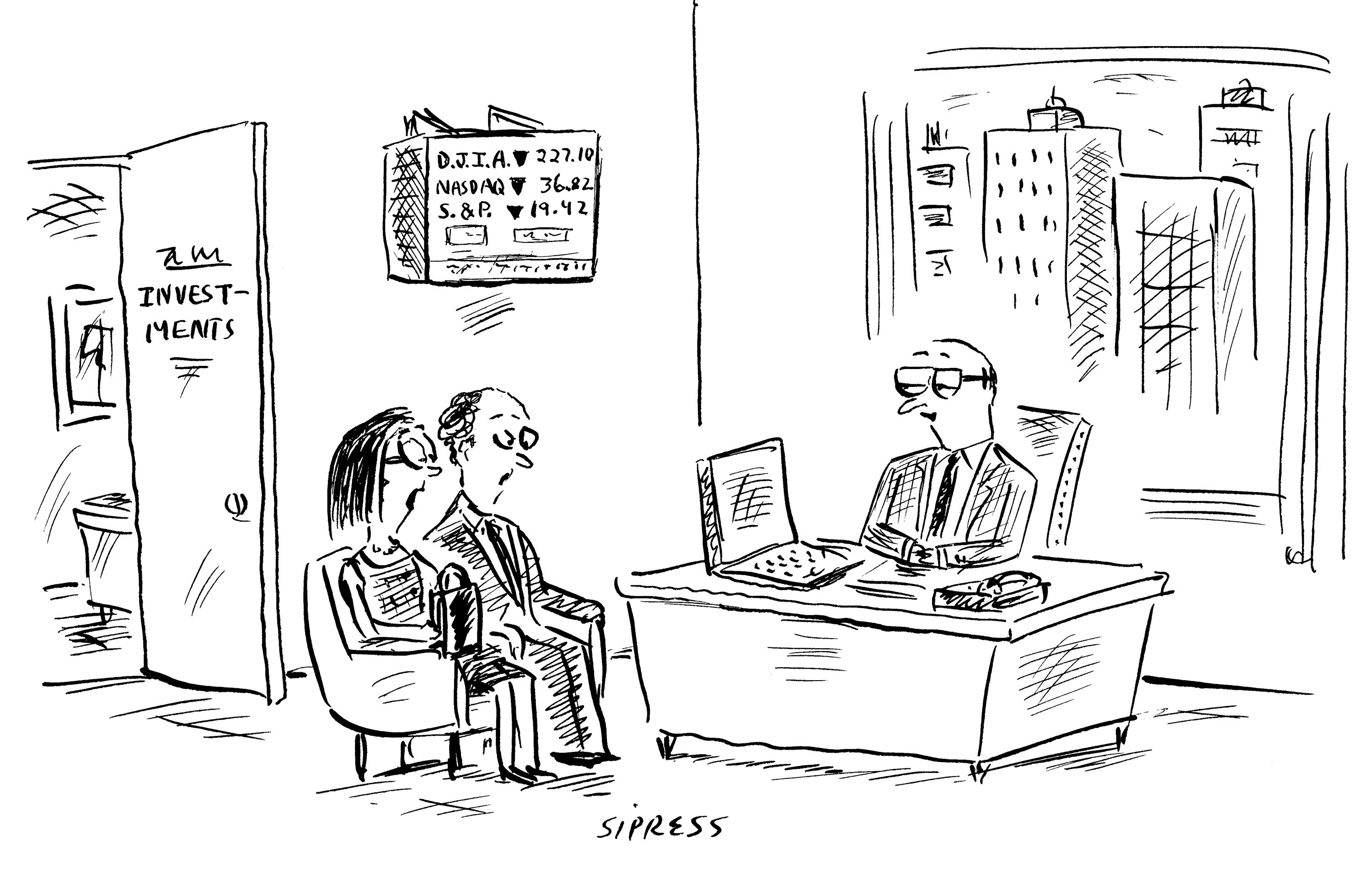
Investing is more than a financial exercise. The most seasoned investor feels a twinge of fear and concern when volatile markets react negatively to sudden economic shocks. Those cool-headed decisions based on a sound investment policy offer little comfort when there are sudden declines. Why do we become prisoners of our emotions subject to making the wrong choices at the wrong time? There are evolutionary reasons for our behavior. The science of “Behavioral Finance” has shown that we are the product of inherent emotional biases in our core genetic code. We fear losses significantly more than we value gains. A loss aversion bias likely developed during human evolution as a survival mechanism, deeply rooted in the way our ancestors needed to make decisions under conditions of uncertainty and scarcity. Early humans faced an environment where resources such as food, shelter, and water were not only scarce but also crucial for...

Sam Gyimah, Geopolitics of Business podcast host and former UK Minister for Science Innovation and Higher Education, discusses the geopolitics of business and investment in this Video Insight. Sam draws on his background as UK MP, Minister, banker, entrepreneur, and board member of Goldman Sachs International, Cambridge University Endowment, and Oxford Innovation. Find Sam’s podcast here: The Geopolitics of Business.

As we analyze the global situation in early 2024, a mosaic of complex geopolitical events unfolds, each with potential ramifications for the global economy and investors. Do these events rise to the level of “breaking the glass” and pulling the fire alarm? The intensification of conflicts in the Middle East, notably the escalated attacks by Iran-backed Houthi rebels in the Red Sea and the Iranian Islamic Revolutionary Guard Corps’ operations in Iraq and Syria, pose a significant threat to regional stability. The recent death of three American soldiers in Jordan caused by a rebel drone raise the stakes of an expanding war in the Middle East. These actions, coupled with Israel’s countermeasures against Hamas and operations in Lebanon, illustrate the intricate dance of power and retaliation that is playing out. Meanwhile, the political landscape in East Asia is equally turbulent. Taiwan’s election with a new pro-independence President contrast with an...
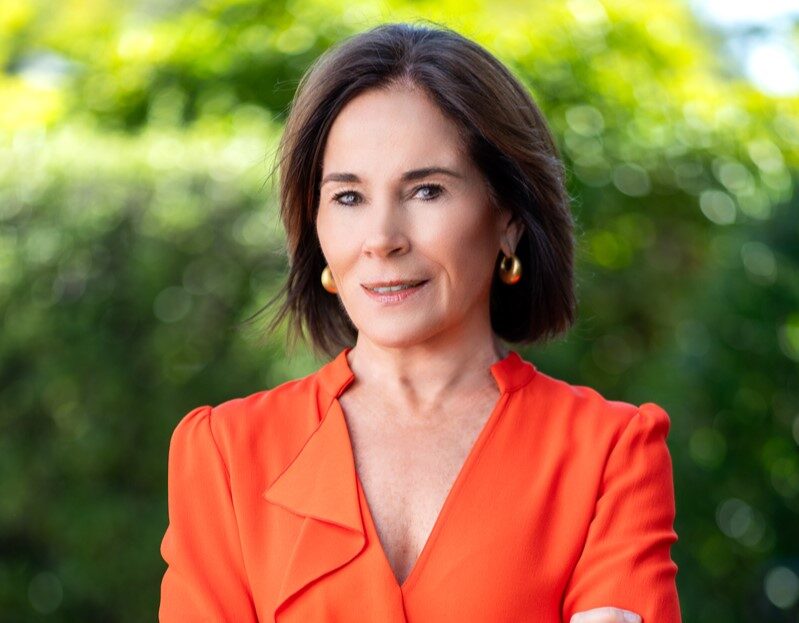
[MONTECITO, CA, January 10, 2024] — Manchester Capital Management LLC, a leading private family wealth office in the United States, is delighted to announce the appointment of Susan W. Sofronas as a Partner working out of the firm’s Montecito, CA office. Susan will add strategic leadership to Manchester Capital’s capabilities and reinforce its unwavering dedication to providing outstanding, bespoke wealth management solutions. Susan has an outstanding record of advising some of the most sophisticated and affluent families and she brings a wealth of knowledge and expertise that align perfectly with our vision for continued client success. Her career reflects a demonstrated track record of leading and advising complex families in achieving their wealth goals, coordinating family and business matters, and guiding multigenerational families in successfully shaping their legacies. Susan’s insights on assisting women in wealth management have been featured across diverse financial platforms. Renowned for her strategic acumen, Susan has earned...

If you Google “Where is the best place to hide a dead body?” the first search result, from theleverageway.com, claims the best place is “page 2 of Google search results.” According to the site, “Studies have shown that about 91.5% of search engine click-throughs occur on the first page of search results.” This response to the enquiry inadvertently reveals multiple dilemmas faced by modern information consumers, the most critical of which is, what can be trusted? In simpler, more naïve times, finding the answer to “Where is the best place to hide a dead body?” would involve some legwork on our part. We might survey friends and colleagues to get their thoughts. We might discuss past “difficult cases” with a coroner. We might drive to a lake or forest to check out possibilities. A trip to a nearby library might be in order to consult chemistry books about chemicals capable of...
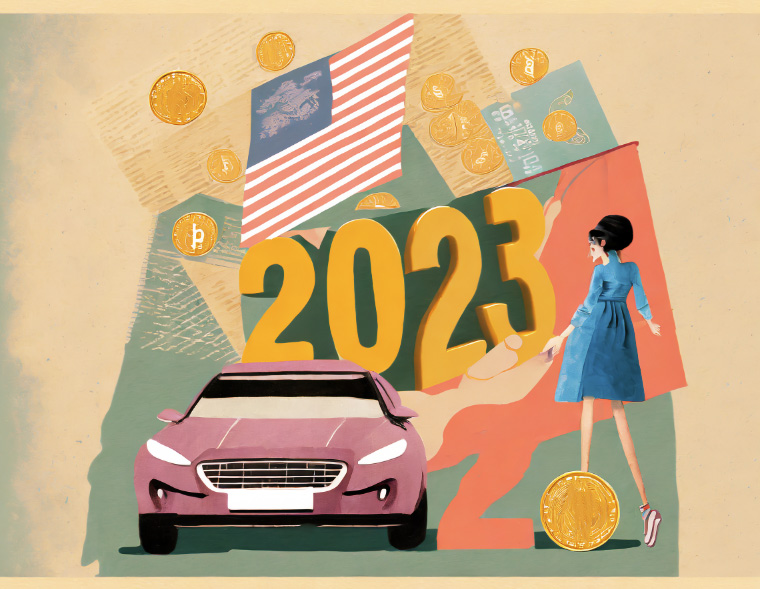
As we count down the days to 2024, we’d like to take a moment to reflect on 2023 defined by some interesting numbers that tell the tale of a unique year. 33,888,140,000,000 – The U.S. National Debt in dollars as of December 4th. The Federal debt to GDP ratio now stands at 122%. That represents $100,840 per U.S. citizen.[1] 1,080,000,000,000 – The total amount in dollars of credit card debt owed by Americans. This number topped $1 trillion for the first time after rising $45 billion in the second quarter and $48 billion in the third quarter.[2] Although revolving debt as a dollar amount is high, and current rates are more punishing than we have seen in decades, at 6.3% of disposable income, revolving debt is below the 6.6% 2012 – 2019 average.[3] Couple this with the fact that most mortgage holders were able to lock in low mortgage rates...

Regularly reviewing existing estate plans is a good financial practice, and the looming change to the lifetime estate/gift tax exemptions at the end of 2025 makes now an opportune time to review your plans. Two powerful tools in estate planning are time and interest rates. With time, the more you have remaining, the greater the number of estate planning options available to you. With interest rates, the lower the prevailing rates, the more likely investments can achieve excess returns, thus the more attractive many strategies become. The ultra-low interest rates of the past decade were a boon for many estate planning strategies, but the increase in interest rates does not mean the end of effective estate planning opportunities. Indeed, there are a handful of strategies that become even more attractive in a higher interest rate environment. Rising interest rates influence the effectiveness of various estate planning tools. Leveraging these tools...

It seems that Chatbots and Artificial Intelligence are invading every part of modern life. According to recent news reports, over 80% of Fortune 500 companies have adopted one of the new large language AI models.[1] Goldman Sachs estimates that AI adoption could enable a 1.5% increase in labor productivity resulting in an increase of 1.1% per year of Gross Domestic Product (GDP – the total value of all goods and services produced by the economy). Given that our GDP normally averages around 2.5%, a 1.1% addition to our average GDP could represent a 40% increase, significantly impacting corporate earnings and market valuations across the economy.[2] Certainly, AI models can organize, summarize, reconcile, and interpret labeled data beyond human capacity, but can they duplicate the more intangible aspects of human endeavors? These models increasingly mimic human behaviors and beg an intriguing question: are they more than just a better abacus that...

Manchester Capital Management is proud to announce that Founder and Executive Chairman, Ted Cronin, has once again been honored among Barron’s “Top 100 Independent Financial Advisors.” According to Barron’s, the ranking reflects the volume of assets overseen by the advisor and their team, revenues generated for their firm, and the quality of the advisor’s practice. Ranked 12th this year, it is Ted and Manchester Capital’s 17th consecutive mention on the list. Since its inception, Manchester Capital Management has been synonymous with industry-leading financial advisory services that emphasize personalized strategies tailored to individual and client families’ unique goals and objectives. Since its founding over 30 years ago, Manchester has evolved into a team of 35 employees who are dedicated to fostering a culture of innovation, trust, and integrity within the firm. “This is a wonderful recognition of our Manchester team and the incredible clients we have the privilege of serving. Our...

The year 2022 was a bloodbath for both equity and bond markets–the S&P 500 was down 18% and the Bloomberg US Aggregate Bond Index had its worst year ever, down 13%. This year, 2023, began with the US debt ceiling standoff, followed by a banking crisis, and continued rate hikes by the major central banks. The economy seemed like it would get worse before it got better, and the consensus was calling for a near-term recession. However, the stock market quickly shrugged off many of these concerns. Year-to-date as of August 31, the S&P 500 is up approximately 17% and NASDAQ is up approximately 34%. The S&P 500 is officially in a bull market (i.e., up at least 20% from its recent lows in October 2022). With the Federal Reserve and some economists no longer forecasting a recession[1], it makes one wonder what has changed in the last few months....

The cost of a college education is typically the first great expense a young person encounters. According to the Massachusetts Educational Financing Authority (www.mefa.org), an average in-state public college will run roughly $24,000 for the 2023-2024 year and a little more than $100,000 for a four-year degree. Meanwhile, the average private college will cost about $55,000 for a starting freshman and could total more than $230,000 over the course of four years. Herbert Stein, an American economist, famously said, “If something cannot go on forever it will stop.” The growth of college costs will peak at some point and then recede; when that will occur is much more difficult to predict. Until that time, we will address circumstances as they currently are—how to finance this significant expenditure and how to view saving for college as a wealth transfer strategy. For the purposes of this piece, we will assume that our future...

For more than three years, the United States economy has been working through a massive set of disruptions related to the COVID pandemic, the subsequent policy responses, and the second-order effects of those responses including a spike in inflation, interest rate volatility, evolving living and working patterns, and accelerating technological innovation. These disruptions have touched nearly all aspects of our daily lives with significant reverberations throughout the real estate industry. Real estate is inherently cyclical and highly dependent on capital markets and debt for liquidity. Commercial real estate in particular has seen tremendous impacts from these recent disruptive forces. Transaction volume initially dropped and subsequently skyrocketed during the pandemic as stimulus and historically low interest rates drove investors into any assets offering positive yields. As a result, valuations increased as investors drove pricing higher in auction processes. Rents, particularly in the apartment and industrial sectors, increased substantially due to strong...